Thursday, 22 August 2013

Rules, Rules and More Rules

Galapagos Island National Park and Marine Reserve Map

Preservatin of Blue Footed Boobies You've finally made it - you're in the Galapagos Islands.  You want to have fun, adventure, freedom, play on the beach, glide gently through the mangroves, climb inside a volcano.  Who knows what interesting or sometimes even crazy things you may want to do once you get here.  Your imagination may be running rampant.  And, believe me, you will have a marvelous time.  You will find yourself responding to new and unusual animals, sea creatures and birds with wonder - sometimes even the wonder of a child.  You'll swim with sea lions, watch all types of animals mating, walk on lava, see Mars-like vistas and the beautiful crystal clear ocean and you'll experience the most amazing sunrises and sunsets imaginable. 

Owl on Genovesa Island
But, I have to be perfectly honest, all of your adventures will be subject to "the rules."  There are lots of rules here and it's essential that you follow them.  All of the Galapagos Islands - both land and sea - are part of a vast national park that is environmentally protected and maintained by the Galapagos National Park Service.  The Park Service's primary responsibility is to keep the land and water here natural and untainted. After all, the animals were here first - and we want them to stay here "forever."  This is their home and they indulge us by allowing us to infringe on their environment.  They aren't the least bit afraid.  And that behavior is as intriguing as anything else you will experience here.  But bear in mind that part of the reason they are unafraid and don't mind our encroachment is that there are rules that prevent us from intentionally or accidentally interfering with their freedom, their food source and their habitat.  The rules are good ones - definitely not meant to be broken.  And, broken rules may lead to serious consequences not only for the one breaking them but for the wildlife and flora as well. As you will be told time and again, the ecosystem of the Galapagos Islands is delicate.  It is your responsibility to help us maintain nature's delicate balance.

So, let me explain:
Wednesday, 12 June 2013

Galapagos Flightless Cormorant - Unique in All the World


Galapagos Flightless Cormorant
What a wondrous creature – the Galapagos Flightless Cormorant (Phalacrocorax harrisi). There is nothing like it anywhere else in the world. It epitomizes the meaning of species adaptation and is one of the most unique and interesting birds anywhere on Earth. With its long neck, grace and gentle demeanor, it's a favorite attraction for all Galapagos visitors. Look at those piercing blue eyes.


Galapagos Flightless Cormorant
Photo by David Cook Wildlife Photography
There are cormorants found all over the world and all species of
cormorant are marine birds that source their food from the sea. With one exception - our unique and remarkable cormorant -  cormorants fly above the ocean and dive down to catch the fish on which they survive. Once, our cormorant too flew, just like the other 27 species of cormorants found around our planet. Yet, over time, our unique and beautiful creature evolved and adapted to the rugged and arid volcanic terrain surrounded by salt water that defines the Galapagos Islands.


Sunday, 19 May 2013

It's May - Paradise for Waved Albatross

This is a most exciting time of year for Punta Suarez on Espanola Island.  Though there is never a bad time to visit this island, in springtime, visitors get to see all of the Waved Albatross in the world settle here, engage in their ritual dance, mate, and care for their babies.  I've written about Punta Suarez before.  See that post, here.  And, I'm sure you'll hear more about it again, because it differs from season to season.  Sometimes the blue footed boobies' nursery is the centerpiece.  Now though, in springtime, it's the amazing, wondrous Waved Albatross.

Albatross Esganola Island Galapagos Suarez Point
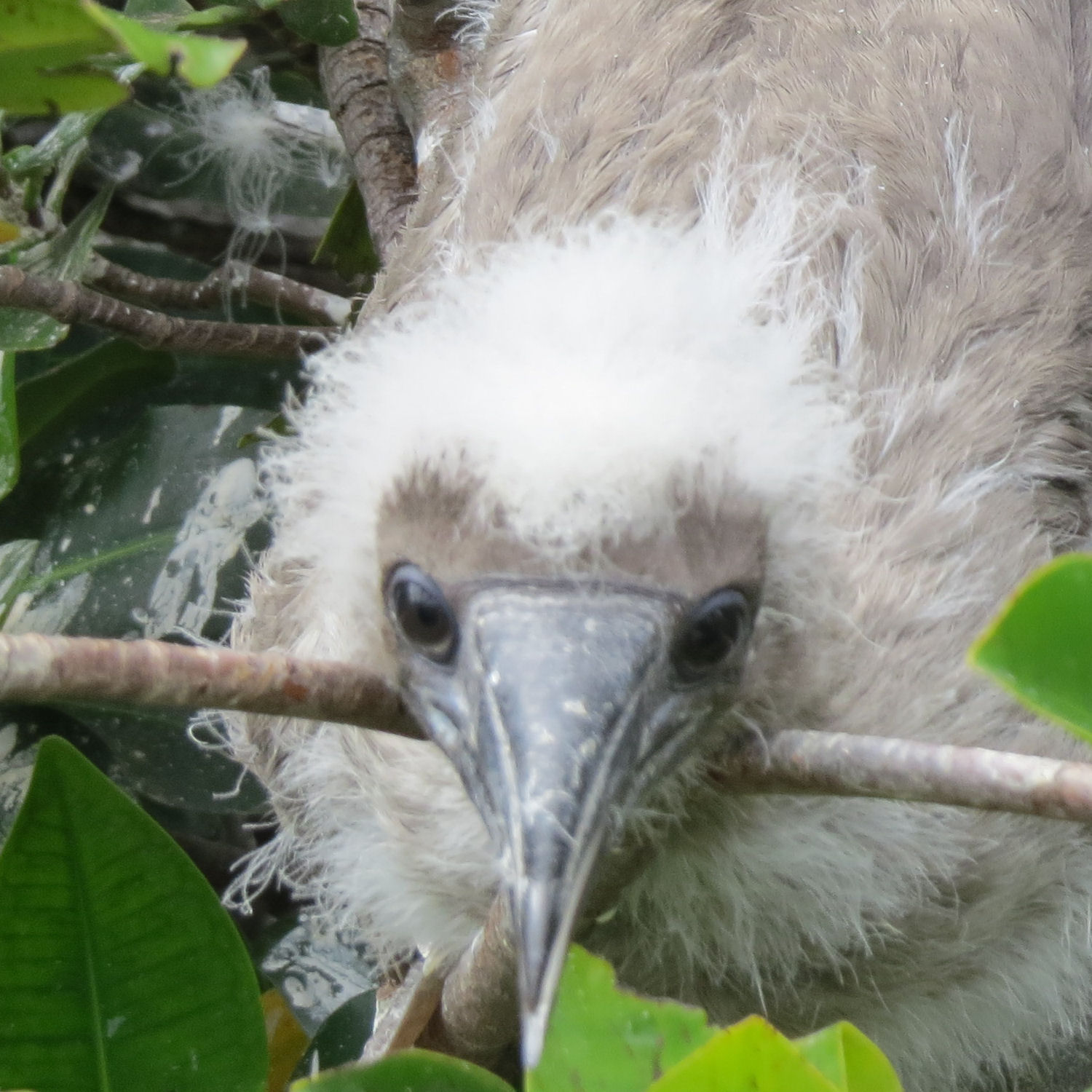
Here's one now - greeting us head on - completely unafraid - posing for the camera.


Waved Albatross Mating Area on Espanola Island Punta Suarez Galapagos
Mating Area
Mariners have long associated albatross with good luck because when a sailor sees an albatross, land is near.  If you visit Punta Suarez on Espanola Island from the beginning of spring through November, and see these dramatic and unique birds, you’ll believe that they bring good luck too.  Your landing by panga on Espanola will barely hint at the wonder you are about to experience.  The initial path is rocky and dry, typical of the volcanic formation of the Galapagos Islands.  Soon though it opens up to a gorgeous view of the Pacific Ocean, pounding seas, dramatic blow holes, and, most special of all, the world’s only Waved Albatross mating area.
Monday, 6 May 2013

Santa Cruz Island - Black Turtle Cove

Santa Cruz Island, Black Turtle Cove Panorama
Santa Cruz Island, Black Turtle Cove Panorama from Wiki
Located on the northern shores of Santa Cruz Island, Black Turtle Cove is a very special place; the atmosphere is quiet, contemplative and visual. Galapagos National Park rules require that upon your arrival at Black Turtle Cove via panga, the motor be turned off.  Silence and stillness permeate.  That is until you start to hear the sounds of nature all around you. Listen to the birds, hear the water and waves, listen for the sounds of fish jumping in the still waters, look around and smell the greenness of the mangrove trees that surround this beautiful area. In the panga you will navigate into the cove and then through the mangrove forest, sometimes paddling so as not to disturb the wildlife. The approach to the wildlife in silence assures that the nesting green sea turtles, sharks, herons and rays are allowed to remain peaceful and undisturbed in their natural habitat.

Approach to Black Turtle Cove
The mangroves themselves are beautiful, dense and diverse. Some are old; some new. They are not all alike; in fact, there are three mangrove species at Black Turtle Cove. Their root systems merge directly into the shallow blue saltwater of this cove. Their colors vary and the leaves sparkle where they are hit by the tropical sun.

Monday, 15 April 2013

Santa Cruz - Charles Darwin Reseach Station


Entrance to Charles Darwin Research Station
Entrace to CDRS by Scott Abelman
The Charles Darwin Research Station on Santa Cruz Island near the town of Puerto Ayora, is one of the best known and most visited sites in all of the Galapagos. The CDRS is a joint effort of the Charles Darwin Foundation and the Galapagos National Park Service to protect, conserve, keep from extinction and repopulate the many Galapagos Tortoise species that are endemic to the islands.


Lonesome George and a Petite Female Galapagos Tortoise
George and a Female
CDRS was created in 1964 and its tortoise preservation program initiated in 1965. From 1971 until his death in June 2012, CDRS was the home of the biggest celebrity in the Galapagos Islands, Lonesome George. George, who lived at the CDRS for more than 40 years, was the last extant tortoise from Pinta Island and had, for many years, been the focus of concerted efforts to breed him with other similar, but not identical, tortoises. Unfortunately, all efforts failed and when George died, so did the species. For an extensive discussion of Lonesome George and the efforts to reproduce the species see my earlier post written right after his death