Showing posts with label Travel. Show all posts
Tuesday, 6 October 2015

Eco-Tourism and Ethical/Responsible Travel – An Essential Combination

What is it about traveling that brings out the best in some and the worst in others? I'm not entirely sure but I've observed that the happiest, most relaxed of my guests (whether at the hotel or on a cruise ship) are those who come with the desire to immerse themselves in the experience. In most cases, these are the very same guests who have done research about our surroundings and our culture so that they are not surprised and they understand our basic customs and even our economies, just as we (the hosts if you will) have studied theirs. The result is mutual respect and the willingness and ability to learn from one another, enhancing everyone's time and experience. This, combined with a commitment to the environment and conservation, is central to the concept known as "ethical travel."

Anais Nin is credited with saying, “We travel, some of us forever, to seek other places, other lives, other souls.” Responsible travelers not only seek, but touch, others in a conscious and special way. They leave behind a special footprint, not one that harms or impacts the environment, but one that leaves a lasting and positive impression on those around them.
Wednesday, 5 November 2014

When to Visit Galapagos - Part One

Welcome to Galapagos!


Sea Lions Welcome You at Puerta Villamil, Isabela Island, Galapagos

There's never a bad time to visit Galapagos and October and November are no exception. Though it's considered to be low season here, I think it's a marvelous time for a visit. The weather is great. The sights are as beautiful as at any other time of year. The animals come out to play. The flora has many brilliant colors that you don't see at other times of the year. And, the sky and water are glorious shades of blue. Not only that, it's been my experience that there may be fewer passengers on the ships and visitors at the hotels, so you could get a great rate - to say nothing of extra one-on-one attention. It seems like a great time to schedule your trip.
Tuesday, 8 April 2014

Charles Darwin Research Station - Fifty Years of Conservation

Charles Darwin Research Foundation
A "must see" destination for any visitor to the Galápagos Islands is The Charles Darwin Research Station. Once known primarily as the home of Lonesome George, now that George is gone, visitors are recognizing it for so much more: a major center for scientific study and the preservation of all species on the Galapagos Islands.


The scientists and conservationists responsible for founding the CDRS showed tremendous insight and foresight.  Long before conservation and sustainability were trendy, the CDRS saw that human intervention was needed to assure survival of the diversity and uniqueness of the Galapagos Islands.

Tortoise Breeding Project
This endeavour started in the 1950s when a young researcher, Irenäus Eibl-Eibesfeldt, came to the Galapagos Islands and became fascinated by the uniqueness of the islands fauna and flora, but likewise concerned about its future survival and the need for conservation.  He shared his findings with the International Union for Conservation of Nature (IUCN), among other organizations, and strongly advocated for a biological research station for study and laboratory experimentation. Originally established as a center for tortoise breeding projects, CDRS has expanded to the forefront of organizations determined to protect endangered species and restore them to unprotected status.
Tuesday, 25 March 2014

Luxury Galapagos Style


My friend Ivan and I wrote and perform a song about the Galápagos Islands that is filled with joy and celebrates the natural beauty and magnificent animal and marine life surrounding us. If you listen to the video you'll get the essence of what makes this place we call Paradise so special. I invite you to watch the video and luxuriate in the magnificence we know as the Galápagos Islands.

The Galápagos Islands are unlike anywhere else in the world. That's why this is such a desirable destination. Guests from around the world come here expecting luxurious first class service - and they will get it. There's just one thing: luxury in the Galápagos Islands is unlike what you'll find at the Ritz or Four Seasons or even on Crystal Cruises. Let's call it pampering and opulence "Galapagos style."

Here's what I mean:
Galapagos Islands Volcanic cliffs
Cliffside Santiago Island Galapagos
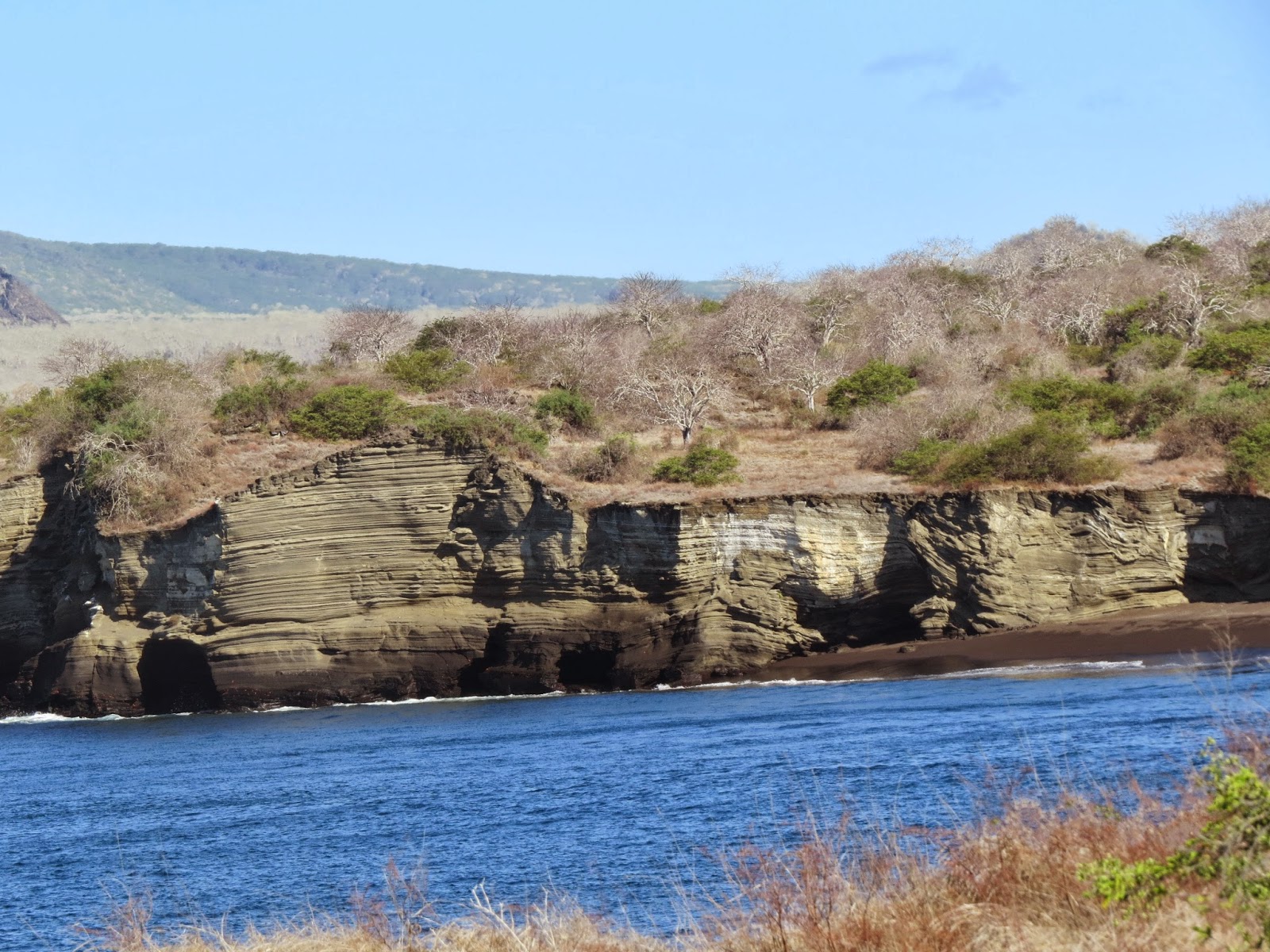
You're on a beach vacation, but most of our beaches consist of rocky coastlines and volcanic ash. We don't have beachfront homes as in Palm Beach or beachfront resorts as in Maui. The beach - every bit of it - is national park and very well protected. Our beaches are still meant for sea lions and green sea turtle nests, for pelican mating and iguanas sunning - not for people.
Tuesday, 18 March 2014

Frigate Birds of the Galapagos Islands - The Dating Game


Galapagos Frigate Birds
The mating ritual of Galapagos Frigate Birds reminds me of going to a bar where the girls pick up the guys. In this case, the males sit in tree branches, rather than on bar stools.  And the females fly and circle above, examining each of the male specimens, assessing them, listening to their banter and ultimately making a decision.  It's quite an interesting and rather noisy process, but it seems to work for the Frigates.

Mating Pose
When you go to North Seymour Island in the Galapagos Islands, you will see this ritual repeated over and over again.  In their effort to attract a mate, the males perch in the trees in groups, puff up their bright red pouches, extend their considerable wings (with spans of about 6 feet in width) and put on a display for the rather plain (in comparison) females who circle above.  The males call out to the girls, sounding either like a drum or a turkey (the sound depends on whether they are Great or Magnificent Frigate Burds) and eventually strike the fancy of one of them.
Tuesday, 25 February 2014

Galapagos Islands - More Than a Bucket List Destination

Galapagos Island Travel
Blue Footed Boobie
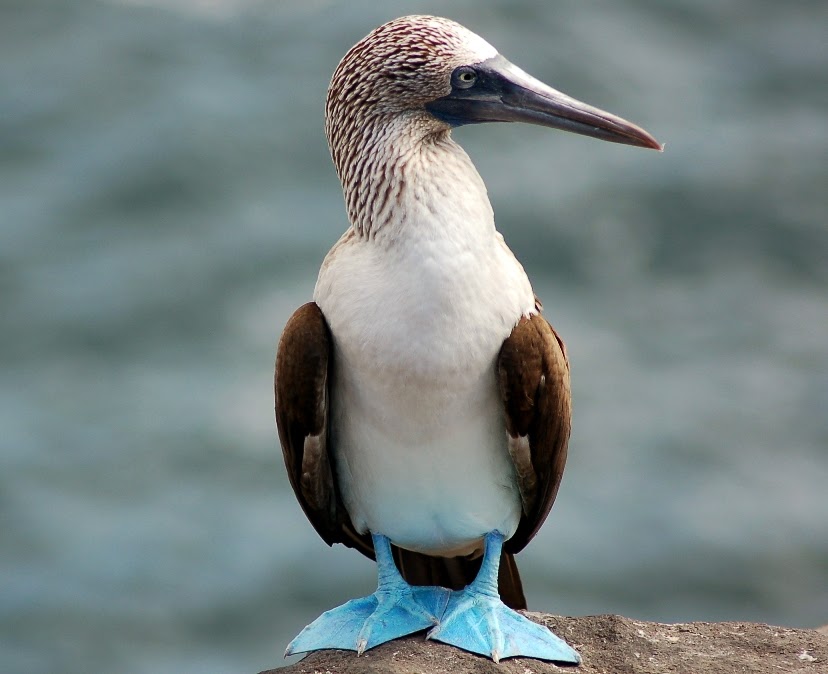
It's not a surprise to me that USA Today recognizes the Galapagos Islands as the number one "bucket list" destination in the world today.  Why not? After all, more species of animals, plants and marine life are endemic to our islands than exist anywhere else on the planet. Undoubtedly, the Galápagos Islands are a destination of choice.

But I admit I have developed a bit of a bias against my home being a destination merely to be checked off a bucket list. It is so much more.

First, consider my perspective. I've lived here all my life. I revel in the beauty, power and uniqueness that surround me. I never tire of this world. Every sea lion is distinctive. Every inch of lava is a work of art. Every day is a chance to learn and expand my appreciation of the planet.  So, here's my dilemma: it's been my experience that those who come here just because it's on their bucket list run the risk of overlooking some of the real highlights of their visit.  They can be so determined to make it through the list that they fail to immerse themselves in where they are in the moment.
Tuesday, 11 February 2014

Santa Cruz Island - Academy Bay - Clearest Waters in the World

Puerto Ayora, Academy Bay
If you haven't been to Academy Bay, it deserves a visit.  Located just outside of Puerto Ayora, it is the most populous location in the Galapagos Islands.


Crystal Clear Waters of Academy Bay
Not only that: Academy Bay has been ranked as one of the most crystal clear beaches in the entire world.


Wednesday, 11 September 2013

Why Can't I See That Animal - Camouflage on the Galapagos Islands


The heads of these marine iguanas basking in the sun look just like the surrounding rocks.
Survival of the fittest. Adaptation of the species.

Familiar phrases, but what do they mean? In the simplest terms, they mean that animals have, over time, changed in ways that give them the ability to survive despite challenges in their environment. One such adaptation is the ability to change color to blend into the surrounding landscape, thus offering protection from predators. The volcanic land masses on the Galapagos Islands are predominantly shades of earthy tones in browns, tans, blacks, siennas, whites, grays and dusty greens. With few exceptions, this means the birds and wild life blend into their surroundings, protecting them from hawks and other prey.

In this post, I share with you some of my photos that graphically show how millions of years of adaptation protect our precious life forms.


You might walk by this bird's nest dozens of times before realizing its presence.
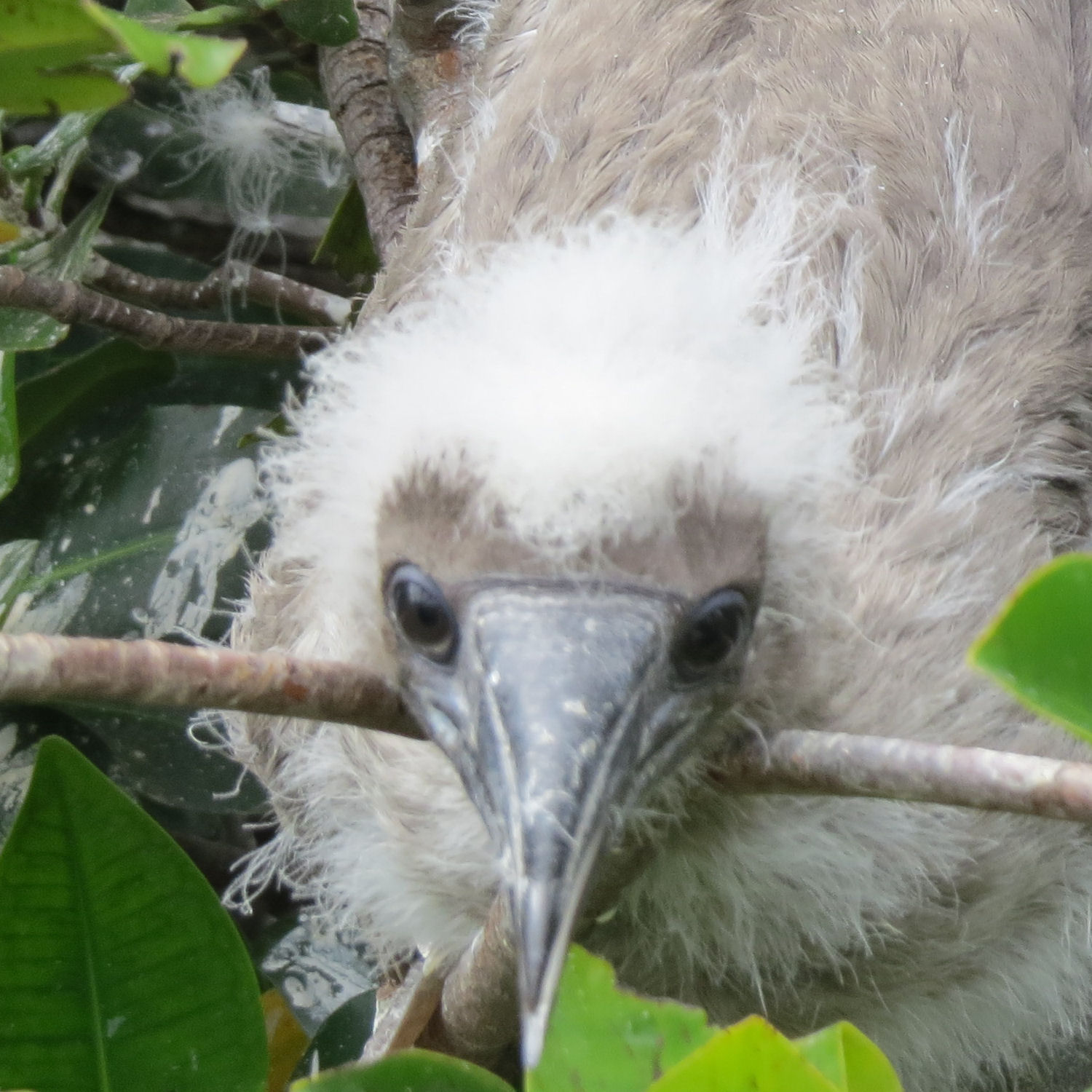
A little boobie chick hiding in the bushes.
  

Thursday, 22 August 2013

Rules, Rules and More Rules

Galapagos Island National Park and Marine Reserve Map

Preservatin of Blue Footed Boobies You've finally made it - you're in the Galapagos Islands.  You want to have fun, adventure, freedom, play on the beach, glide gently through the mangroves, climb inside a volcano.  Who knows what interesting or sometimes even crazy things you may want to do once you get here.  Your imagination may be running rampant.  And, believe me, you will have a marvelous time.  You will find yourself responding to new and unusual animals, sea creatures and birds with wonder - sometimes even the wonder of a child.  You'll swim with sea lions, watch all types of animals mating, walk on lava, see Mars-like vistas and the beautiful crystal clear ocean and you'll experience the most amazing sunrises and sunsets imaginable. 

Owl on Genovesa Island
But, I have to be perfectly honest, all of your adventures will be subject to "the rules."  There are lots of rules here and it's essential that you follow them.  All of the Galapagos Islands - both land and sea - are part of a vast national park that is environmentally protected and maintained by the Galapagos National Park Service.  The Park Service's primary responsibility is to keep the land and water here natural and untainted. After all, the animals were here first - and we want them to stay here "forever."  This is their home and they indulge us by allowing us to infringe on their environment.  They aren't the least bit afraid.  And that behavior is as intriguing as anything else you will experience here.  But bear in mind that part of the reason they are unafraid and don't mind our encroachment is that there are rules that prevent us from intentionally or accidentally interfering with their freedom, their food source and their habitat.  The rules are good ones - definitely not meant to be broken.  And, broken rules may lead to serious consequences not only for the one breaking them but for the wildlife and flora as well. As you will be told time and again, the ecosystem of the Galapagos Islands is delicate.  It is your responsibility to help us maintain nature's delicate balance.

So, let me explain:
Monday, 6 May 2013

Santa Cruz Island - Black Turtle Cove

Santa Cruz Island, Black Turtle Cove Panorama
Santa Cruz Island, Black Turtle Cove Panorama from Wiki
Located on the northern shores of Santa Cruz Island, Black Turtle Cove is a very special place; the atmosphere is quiet, contemplative and visual. Galapagos National Park rules require that upon your arrival at Black Turtle Cove via panga, the motor be turned off.  Silence and stillness permeate.  That is until you start to hear the sounds of nature all around you. Listen to the birds, hear the water and waves, listen for the sounds of fish jumping in the still waters, look around and smell the greenness of the mangrove trees that surround this beautiful area. In the panga you will navigate into the cove and then through the mangrove forest, sometimes paddling so as not to disturb the wildlife. The approach to the wildlife in silence assures that the nesting green sea turtles, sharks, herons and rays are allowed to remain peaceful and undisturbed in their natural habitat.

Approach to Black Turtle Cove
The mangroves themselves are beautiful, dense and diverse. Some are old; some new. They are not all alike; in fact, there are three mangrove species at Black Turtle Cove. Their root systems merge directly into the shallow blue saltwater of this cove. Their colors vary and the leaves sparkle where they are hit by the tropical sun.

Monday, 15 April 2013

Santa Cruz - Charles Darwin Reseach Station


Entrance to Charles Darwin Research Station
Entrace to CDRS by Scott Abelman
The Charles Darwin Research Station on Santa Cruz Island near the town of Puerto Ayora, is one of the best known and most visited sites in all of the Galapagos. The CDRS is a joint effort of the Charles Darwin Foundation and the Galapagos National Park Service to protect, conserve, keep from extinction and repopulate the many Galapagos Tortoise species that are endemic to the islands.


Lonesome George and a Petite Female Galapagos Tortoise
George and a Female
CDRS was created in 1964 and its tortoise preservation program initiated in 1965. From 1971 until his death in June 2012, CDRS was the home of the biggest celebrity in the Galapagos Islands, Lonesome George. George, who lived at the CDRS for more than 40 years, was the last extant tortoise from Pinta Island and had, for many years, been the focus of concerted efforts to breed him with other similar, but not identical, tortoises. Unfortunately, all efforts failed and when George died, so did the species. For an extensive discussion of Lonesome George and the efforts to reproduce the species see my earlier post written right after his death
Sunday, 19 August 2012

Genovesa (Tower) Island Visitor Sites


Genovesa Island - Darwin Bay, Galapagos
Genovesa Island - Darwin Bay
Photograph from Galapagos National Park Service

Male Galapagos Frigate Bird displaying his red chest to a female

Galapagos Frigate Bird Chick
Frigate Bird Chic
The remote and isolated island of Genovesa is located on the north-east edge of the Galapagos archipelago. The fact of its remoteness contributes to its remaining among the most pristine of the islands, as well as one of the most coveted. Small, horseshoe shaped and precious in its unique blend of harsh volcanic terrain and natural beauty, it boasts a vast amount of birdlife; literally thousands of birds frequent this remote refuge and rely on it as their nesting site. While birdlife abounds, the island has no native land animals and no reptiles other than a small subspecies of marine iguana. Sea lions do lounge on the beaches. The pelagic birdlife that rely on Genovesa as a nesting site includes Frigatebirds, Red-Footed Boobies, Swallow-Tailed Gulls and Petrels by the thousands.
Monday, 13 August 2012

Floreana Island

Sorting the Mail at the Post Office on Floreana Island with Harry Jimenez, owner of Galapagos Eco Lodge
Sorting the Mail at the Post Office on Floreana Island

Post Office Bay and Floreana Post Office

Evidence of Previous Visitors to the Post Office at Floreana Island
Evidence of Previous Visitors to the Post Office
Floreana, one of the oldest of the Galapagos Islands, and first settled in 1832, is named after Juan Jose Flores, the first president of Ecuador. Now, it is best known for the post office located at Post Office Bay, a brown sand beach inhabited by the ever-present Galapagos sea lions lounging in the sun. For nearly 2 ½ centuries – since 1793 – this unique Galapagos Island post office has been operating in the same fashion. Bring your mail and drop it off, addressed to go anywhere in the world. (On a cruise, your guide will likely provide you with brightly-colored post cards of indigenous animals for this purpose). Then, it’s your job to take a look through the mail that has been left by earlier visitors. If you come across a letter you are able to hand-deliver or mail to someone from your home town, you become the personal mail carrier. Hopefully, someone else will soon come along to carry your mail to your friend or family in the same way.  It’s as easy as that.
Thursday, 9 August 2012

Fernandina Island - Espinosa Point and Mangle Point

map of Fernandina on the Left; Isabela on the Right
Fernandina on the Left; Isabela on the Right
Photograph From WikiCommons

Fernandina's Core Erupting in 2009, Galapagos
Fernandina's Core Erupting in 2009 from Nasa Image
The youngest of the Galapagos Islands, at just about 1,000,000 years old, Fernandina remains on the hot spot that created all of the islands. It is considered to be an active shield volcano with a large caldera, although the caldera collapsed in 1968. Fernandina is the westernmost and third largest of the Galapagos Islands. It most recently erupted in 2005 and 2009. The Island's landscape is dominated by La Cumbre Volcano.  The volcano's lava fields stretch all the way from the top of the volcano to the sea itself.

The Galapagos Conservancy and National Park are determined to keep Fernandina as pristine and untouched by humans and other non-endemic creatures as possible. So, although the Island is literally teeming with bird and marine life, there is only one approved visitation spot on the Island. But, it is really something special.

Bartolome Island - Pinnacle Rock and Beautiful Beaches


Bartolome Island; Pinnacle Rock
Photographed by AquaSurround
Bartholome Island has no human population, but is the home to one of the most recognized and photographed sites in all of the Galapagos Islands: Pinnacle Rock. The Island itself is located in Sullivan Bay to the east of Santiago Island. Because it offers such a spectacular view, most Galapagos travelers will find themselves enjoying the splendors of this island.

Steps on Bartolome with Galapagos Hawk Above
Photograph by AquaSurround
The Galapagos Conservancy has built a 600 meter wooden pathway with more than 300 steps to ensure that visitors are guided to the best spots with as little impact on the surrounding endemic vegetation, animal and birdlife as possible. Look carefully at the rock and lava formations on your way up the climb as you will see very interesting volcanic formations of spatter and tuff cones and lava flows.


Sunday, 29 July 2012

San Cristobal Island, Nearby Visitor Sites

Kicker Rock at Sunset, San Cristobal, Galapagos
Kicker Rock at Sunset
I’ve written all about the marvelous spots available for traveling on San Cristobal Island itself in my post entitled San Cristobal Island Visitor Sites. Among them are the main town of Puerto Baquerizo Moreno, La Loberia, The Interpretation Center, Frigatebird Hill, Darwin Bay, La Galapaguera, El Junco and San Joaquin Hill, Puerto Chino, Mann Beach, Punta Carola Beach (sometimes called Cape Horn Beach) and Colorado Hill Lookout. You can learn all about these sites by visiting my earlier post and also on the website for the Galapagos Eco-Lodge.

While the sites on the island itself are all treasures, the beauty and magic of what lies a short boat ride from the harbor is truly dazzling. The first of these sites, and truly an iconic place in all of the Galapagos Islands, is Kicker Rock, sometimes called Leon Dormido. This is such a spectacular location, breathtaking at any time of day, that it warrants an entire post of its own, Kicker Rock.

Thursday, 26 July 2012

San Cristobal Island Visitor Sites


View on the Way to Galapagos Eco-Lodge Hotel on San Cristobal
The Hillside and Center of Puerto Baquerizo Moreno
on San Cristobal from the Harbor at Sunrise

The beautiful and versatile San Cristobal Island is one of the most eastern and oldest of the Galapagos Islands. It is moderately-sized, at 195 square miles. But, that land area is filled with some of the most visited and remarkable sites anywhere in the world. This versatility also accounts for the fact that San Cristobal is the second most populated of the Islands; about 8000 people live on San Cristobal. While all of the Galapagos Islands is dedicated to conservancy and maintaining the tenuous ecological balance discovered by Charles Darwin, nowhere is this more true than the Island of San Cristobal itself. It is a forerunner in the quest for renewable energy; at least 60 percent of its energy already is generated by wind and solar power. You will see the wind towers from the harbor and as you drive throughout the island.

Sunday, 22 July 2012

Kicker Rock Near San Cristobal Island, Galapagos Islands

Kicker Rock at Sunset
Kicker Rock at Sunset photograph by Aquasurround
One of the most photographed sites in all of the Galapagos Islands is Kicker Rock, also known as Leon Dormido because to some it resembles a sleeping lion. Kicker Rock is an easy trip from San Cristobal’s harbor of Puerto Baquerizo Moreno and no excursion to the Galapagos Islands is complete without a visit here. There is no more stunning and majestic site in the Galapagos Islands.


Kicker Rock Daytime
Kicker Rock Daytime photograph by Aquasurround

The two inexorable towering monoliths of Kicker Rock are a constant presence within an environment that is otherwise ever-changing and dynamic. Approaching Kicker Rock, you may at first see only one large rock inexplicably rising from the Pacific. As the boat gets closer, you begin to see that there are, in fact, two high peaks and soon you can discern a space between them.
Saturday, 21 July 2012

Espanola Island, Punta Suarez


Punta Suarez, Espanola Island

Espanola Island, the southernmost and one of the oldest islands in the archipelago, is a treat waiting to be discovered by every Galapagos Island visitor. If possible, there is too much beauty, uniqueness and wonder to conceive of in one small place.  

Baby Albatross on Espanola Island, Punta Suarez, Galapagos
Baby Albatross
At Punta Suarez, you have a dry landing – but a very careful one on a rocky ledge – and be sure not to step on the Sea Lions!  You will walk up a trail, through some fascinating flora and fauna and many little lava lizards before arriving at your ultimate destination – the top of a cliff populated by Blue Footed Boobies and Waved Albatross.


Espanola Island, Gardner Bay


Sea Lions Basking in Sun at Gardner Bay, Espanola Island

Espanola Island is the home to several spectacular visitor sites, one of which is the exquisite white sand beach at Gardner Bay. It's a beach perfect for walking and watching the frolicking and resting sea lions, hundreds of which may be seen here at any given time.


To me, this is always a special place. Always, loud guttural barking is a first indication that we have arrived at Espanola Island’s beautiful Gardner Bay. Be prepared for the amazing welcoming committee made of literally hundreds of sea lions lazing on the beach, playing in the surf and soaking up the sun.