Showing posts with label Galapagos. Show all posts
Thursday 4 February 2016

Galapagos Sperm Whales Have Specialized Family Cultures and Dialects

Sperm Whales and Calf from CBC News
(Chris Bangs/Guam Variety News/Associated Press)
We always want to be careful not to anthropomorphise those in the animal kingdom, whether it involves emotions, behaviors or language. After all, animals are not human and we can’t project emotions or thoughts onto them under the assumption that they think and communicate as we do. That said, we have learned from our own household pets how to read their “language” of gestures, looks and sounds and, from these, reach conclusions about whether they are hungry or want affection, are scared or tired or content. 

Even those observations, however, tell us nothing about how animals communicate with others of their own species. Is there a universal or even regional language that animals of a given species use with others of that same species? Scientists study language and other aspects of animal behavior all the time, forming hypotheses about what an animal's behaviors and vocalizations mean, if anything at all. 
Tuesday 6 October 2015

Eco-Tourism and Ethical/Responsible Travel – An Essential Combination

What is it about traveling that brings out the best in some and the worst in others? I'm not entirely sure but I've observed that the happiest, most relaxed of my guests (whether at the hotel or on a cruise ship) are those who come with the desire to immerse themselves in the experience. In most cases, these are the very same guests who have done research about our surroundings and our culture so that they are not surprised and they understand our basic customs and even our economies, just as we (the hosts if you will) have studied theirs. The result is mutual respect and the willingness and ability to learn from one another, enhancing everyone's time and experience. This, combined with a commitment to the environment and conservation, is central to the concept known as "ethical travel."

Anais Nin is credited with saying, “We travel, some of us forever, to seek other places, other lives, other souls.” Responsible travelers not only seek, but touch, others in a conscious and special way. They leave behind a special footprint, not one that harms or impacts the environment, but one that leaves a lasting and positive impression on those around them.
Thursday 3 September 2015

Frequently Asked Questions: How Much Should I Tip on a Galapagos Cruise Ship

This is the first of a series of blog posts in which I will focus on frequently asked questions about travel to Galapagos. Of all the questions I get, the most common is, "Should I tip on the cruise ship and, if so, how much?"


It might appear that, as a guide, I have a conflict of interests. So, when directly asked "How much?" by a cruise ship guest, I typically say something to the effect, "We always appreciate a tip and the amount is up to you." 

The truth is that the crew and guides on cruise ships usually do get tipped and rely on tips to supplement their income. Galapagos is a very expensive place to live; many things cost three times more than on the mainland. But, cruise ship salaries of guides and crew do not reflect that economic reality. This might be something to keep in mind when tipping.


Tuesday 26 May 2015

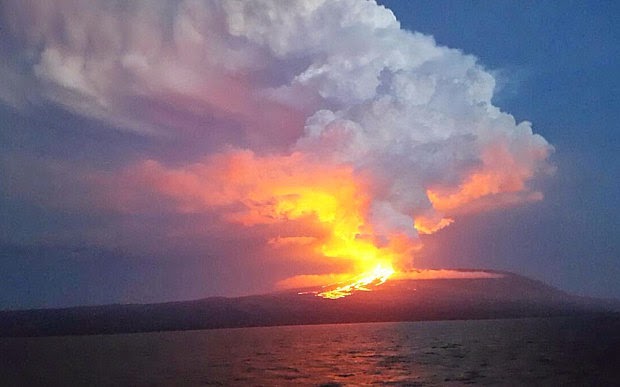
Volcan Wolf Erupts on Isabela Island

Volcan Wolf is erupting right now on Isabela Island for the first time since 1982. It's a spectacular sight to see. 


No human population will be harmed by the eruption. Importantly, the Galapagos National Park Service is reporting that our endemic pink iguana population is not currently at risk. It has been reported that the lava is flowing down the volcano's southern face but that the iguanas inhabit the other side of the volcano. The lava appears to be flowing into the sea, and there is no prediction as yet regarding any effect on marine life near the base of the volcano.


Visit the Galapagos Eco-Lodge facebook page for updates and our blog for more information about Volcan Wolf and our unique pink iguanas.http://blog.galapagosecolodge.net/2013/02/no-two-galapagos-iguanas-same.html; http://blog.galapagosecolodge.net/2012/10/isabela-island-visitor-sites-part-iii.html


Tuesday 7 April 2015

David Attenboro's Galapagos Adventure

I know from personal experience that there can never be too many photographs of the magnificent and diverse menagerie that inhabits the Galapagos Islands.  Here in Galapagos you will see an abundance of animals, birds and marine life. Not only that, it's almost impossible to take a bad photograph of the bounty that lives throughout Galapagos on the land and in the sea. And within that array, one baby sea lion after another presents a unique photo opportunity. Every so often, extraordinary photos are taken and shared with all of us, making our Galapagos vision even more exciting, inviting and memorable.
Wednesday 21 January 2015

Baby Tortoises Hatched on Pinzon Island

Pinzon Saddleback
Tortoise
What a wonderful success for conservation efforts in the Galapagos! Scientists and conservationists are reporting that the saddleback tortoises on Pinzon Island have been saved.

I've talked before about unwanted introduced species in Galapagos and efforts to eradicate them. One of the most invasive of these species were rats. They've been around for centuries really. Most likely, they were brought here on pirate ships. The ships layed anchor, the rats left the boat and swam to shore and there, they lived and dined like kings, particularly on the youngest of our species. Tortoises hatchlings, sadly, made a delicious meal and, as the babies died, so did the species. This was true in many places, particularly on Pinzon Island.
Wednesday 5 November 2014

When to Visit Galapagos - Part One

Welcome to Galapagos!


Sea Lions Welcome You at Puerta Villamil, Isabela Island, Galapagos

There's never a bad time to visit Galapagos and October and November are no exception. Though it's considered to be low season here, I think it's a marvelous time for a visit. The weather is great. The sights are as beautiful as at any other time of year. The animals come out to play. The flora has many brilliant colors that you don't see at other times of the year. And, the sky and water are glorious shades of blue. Not only that, it's been my experience that there may be fewer passengers on the ships and visitors at the hotels, so you could get a great rate - to say nothing of extra one-on-one attention. It seems like a great time to schedule your trip.
Tuesday 21 October 2014

Penguin Update

Galapagos Penguin photo by Joseph Tepper for the Audobon Society
When asked what they are most anxious to see on their Galapagos journey, many of my guests say Galapagos penguins. And, it's no wonder, the little penguins are absolutely as cute as can be. Everyone laughs, points with delight and pulls out their cameras when one or more pops his head out of the water near our panga or lulls about on the rocks near Bartolome, Fernandina or Isabela Islands. As I write this I hear my own voice saying "Penguinos" and pointing them out with great enthusiasm.
Tuesday 14 October 2014

El Niño in 2014? Probably Not.

Iguanas with Babies Basking in the Sun
All year, the Weather Services and NASA have been predicting that Galapagos would suffer an El Niño event by the end of this year.  Well, I'm most happy to report, El Niño is not here with less than three months of the year to go. Not that El Niño is impossible, but at this point in the year the phenomenon seems to be less likely.  NASA provides us with the most accurate predictions of whether El Niño may occur and seems prone to thinking that it won't occur this year, though it's predictions are anything but certain.
Tuesday 16 September 2014

Isolated Galapagos Connected Through Underwater Super Highways

Sanjay the Green Sea Turtle
We tend to think of the Galapagos Island archipelago as totally isolated. And, in many ways, it is. Because of that, Galapagos has become the home of an unprecedented number of endemic species and a valuable and important marine and land preserve. There are many species that can be found no where else in the world. The animals, fish, birds and other marine life in Galapagos have evolved over time and have adapted to environmental factors such as available food sources, water temperatures and currents, dry volcanic terrain, Equatorial heat and available vegetation. Ever since Charles Darwin espoused his theories of species adaptation and survival of the fittest, Galapagos scientists have dedicated research efforts to following species evolution and to finding what distinguishes Galapagos species from any others.
Tuesday 2 September 2014

Boobie Population Decline

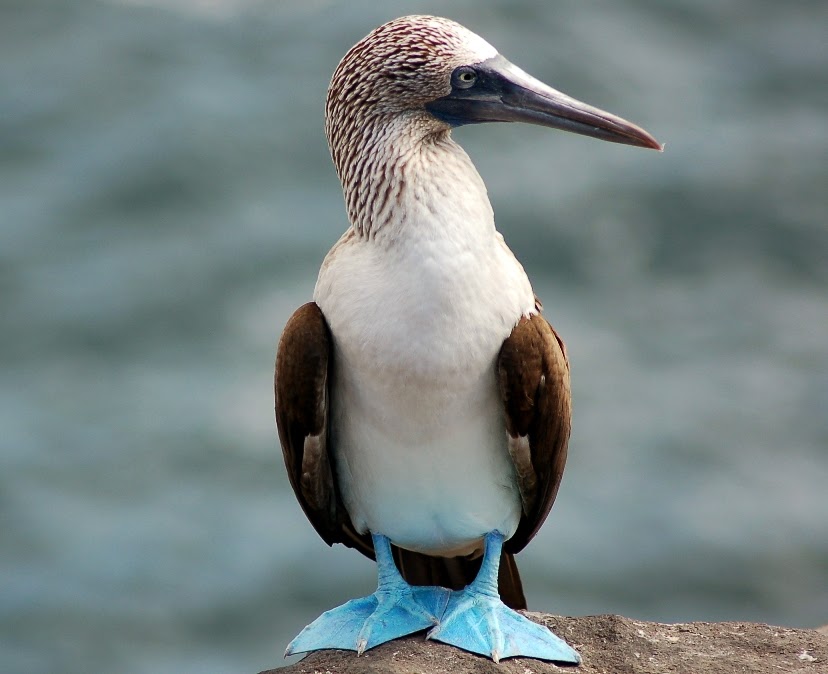
Everyone knows that one of the reasons for a trip to Galapagos is to get up close and personal with the Blue Footed Boobie. This iconic representation of Galapagos is beautiful, fascinating, fun and unique. Watching a boobie mating dance is sheer delight and seeing the new born fluff-ball chicks is heartwarming.
Tuesday 19 August 2014

High Tech Galapagos - Not an Oxymoron

Galapagos UAV
"Remember," I tell my guests, "Galapagos is not like other places." We don't necessarily have all the amenities of home. Wifi, satellite based, without the benefit of fiber optics - well, it's not always reliable. Fresh water - it's at a premium too so water pressure may sometimes be iffy.

What we can rely on is our unique endemic animal, bird and marine life that has been around forever.  You come here to see preservation, not modernity.
Tuesday 6 May 2014

Galapagos: A Hotbed of Scientific Exploration

One of the behind the scenes aspects of the Galapagos Islands, one that visitors and even natives rarely get to see, is the in-depth and often pivotal scientific research that happens on every island on an ongoing basis. I've written before about the finch research taking place on Daphne. And, I've also written extensively about work done constantly by the Charles Darwin Foundation, particularly with their tortoise breeding programs. The most famous of all is, of course, the effort made with the iconic Lonesome George.


But those are merely the best known of the projects. Research, study and observation are all critical components of our quest for maintaining the pristine quality and the ecological integrity of the islands.  In just the last month, results of two new studies were reported in scientific journals. They provide information critical to our understanding of the Galapagos Islands and, equally important, of how much harder we must continue to work to save and protect the biodiversity and natural order throughout the archipelago.
Tuesday 15 April 2014

Daphne Major and Daphne Minor


Daphne Major and Minor with Galapagos Sunset  by Daphne's Mom Flickr Creative Commons
Daphne Major at Sunset
Visitors will not be scheduled for landings on Daphne Major or Daphne Minor, and your boat is likely to circumvent these islands during your cruise. Still, the scientific research that occurs on these two islands is important. Both also provide excellent underwater diving opportunities.


Daphne Island approaching from a boat  by SATaylor Flickr Creative Commons
Daphne
Daphne Major consists of a tuff cone (for an explanation of tuff cones, see my earlier post on volcanoes) and a largely barren landscape. At its highest point the island is just 394 feet above sea level and it is 1.9 square miles in size.
Tuesday 1 April 2014

Galapagos Eco-Lodge Featured in Video Review


The Galapagos Eco-Lodge is so proud to have been featured in a video review that we want to share it with all of our friends and guests.


To learn more, visit the Galapagos Eco-Lodge website and Facebook pages and see additional reviews in The New York Times and on Trip Advisor.


Tuesday 25 March 2014

Luxury Galapagos Style


My friend Ivan and I wrote and perform a song about the Galápagos Islands that is filled with joy and celebrates the natural beauty and magnificent animal and marine life surrounding us. If you listen to the video you'll get the essence of what makes this place we call Paradise so special. I invite you to watch the video and luxuriate in the magnificence we know as the Galápagos Islands.

The Galápagos Islands are unlike anywhere else in the world. That's why this is such a desirable destination. Guests from around the world come here expecting luxurious first class service - and they will get it. There's just one thing: luxury in the Galápagos Islands is unlike what you'll find at the Ritz or Four Seasons or even on Crystal Cruises. Let's call it pampering and opulence "Galapagos style."

Here's what I mean:
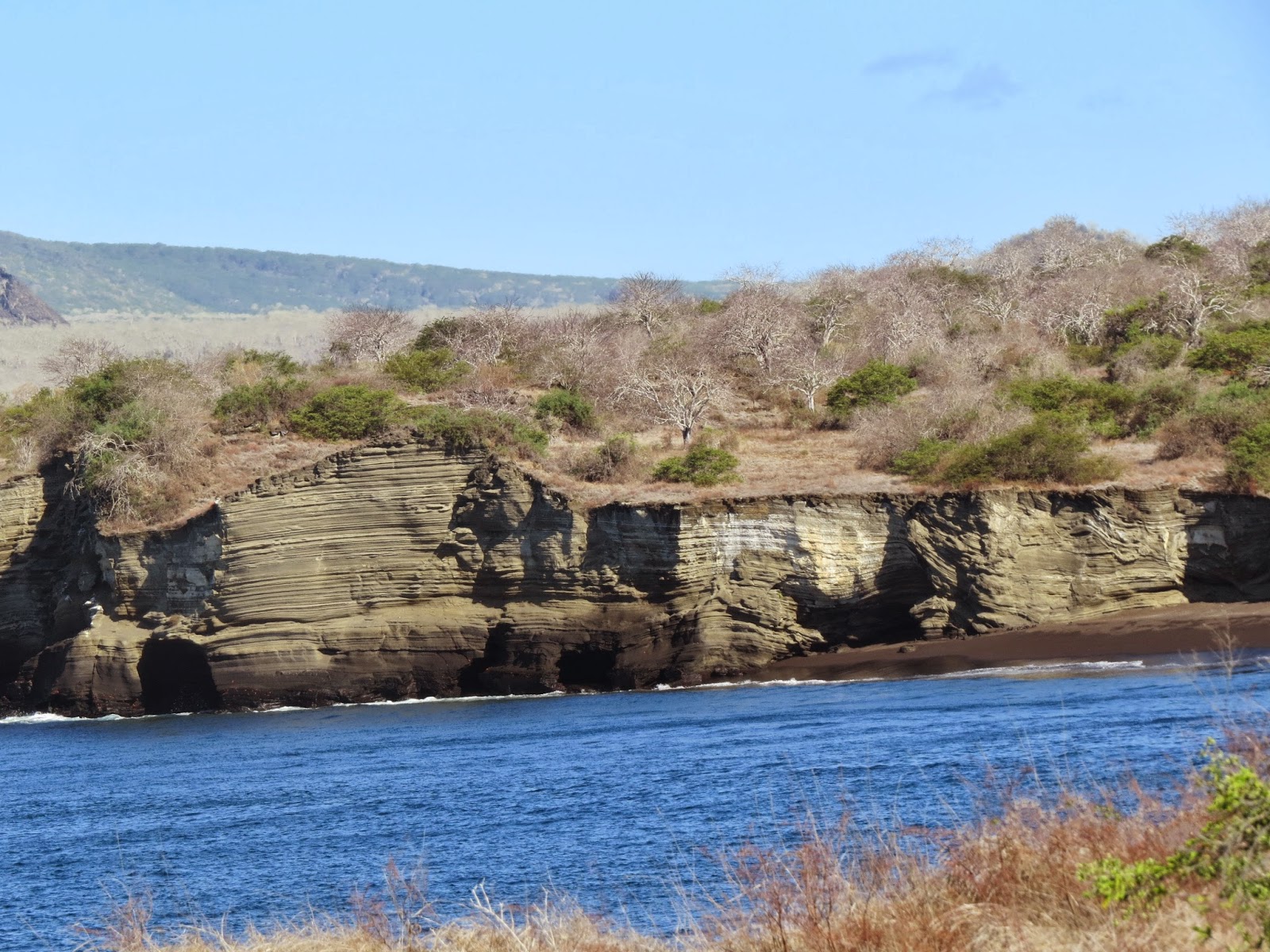
Galapagos Islands Volcanic cliffs
Cliffside Santiago Island Galapagos
You're on a beach vacation, but most of our beaches consist of rocky coastlines and volcanic ash. We don't have beachfront homes as in Palm Beach or beachfront resorts as in Maui. The beach - every bit of it - is national park and very well protected. Our beaches are still meant for sea lions and green sea turtle nests, for pelican mating and iguanas sunning - not for people.
Tuesday 18 March 2014

Frigate Birds of the Galapagos Islands - The Dating Game


Galapagos Frigate Birds
The mating ritual of Galapagos Frigate Birds reminds me of going to a bar where the girls pick up the guys. In this case, the males sit in tree branches, rather than on bar stools.  And the females fly and circle above, examining each of the male specimens, assessing them, listening to their banter and ultimately making a decision.  It's quite an interesting and rather noisy process, but it seems to work for the Frigates.

Mating Pose
When you go to North Seymour Island in the Galapagos Islands, you will see this ritual repeated over and over again.  In their effort to attract a mate, the males perch in the trees in groups, puff up their bright red pouches, extend their considerable wings (with spans of about 6 feet in width) and put on a display for the rather plain (in comparison) females who circle above.  The males call out to the girls, sounding either like a drum or a turkey (the sound depends on whether they are Great or Magnificent Frigate Burds) and eventually strike the fancy of one of them.
Tuesday 25 February 2014

Galapagos Islands - More Than a Bucket List Destination

Galapagos Island Travel
Blue Footed Boobie
It's not a surprise to me that USA Today recognizes the Galapagos Islands as the number one "bucket list" destination in the world today.  Why not? After all, more species of animals, plants and marine life are endemic to our islands than exist anywhere else on the planet. Undoubtedly, the Galápagos Islands are a destination of choice.

But I admit I have developed a bit of a bias against my home being a destination merely to be checked off a bucket list. It is so much more.

First, consider my perspective. I've lived here all my life. I revel in the beauty, power and uniqueness that surround me. I never tire of this world. Every sea lion is distinctive. Every inch of lava is a work of art. Every day is a chance to learn and expand my appreciation of the planet.  So, here's my dilemma: it's been my experience that those who come here just because it's on their bucket list run the risk of overlooking some of the real highlights of their visit.  They can be so determined to make it through the list that they fail to immerse themselves in where they are in the moment.
Tuesday 11 February 2014

Santa Cruz Island - Academy Bay - Clearest Waters in the World

Puerto Ayora, Academy Bay
If you haven't been to Academy Bay, it deserves a visit.  Located just outside of Puerto Ayora, it is the most populous location in the Galapagos Islands.


Crystal Clear Waters of Academy Bay
Not only that: Academy Bay has been ranked as one of the most crystal clear beaches in the entire world.


Tuesday 4 February 2014

North Seymour Island

Sunset over North Seymour Island
Sunset Over North Seymour Island

North Seymour Rugged Coastline in the Pacific Ocean
North Seymour's Rugged Coastline
That North Seymour Island is tiny, just .7 square miles and only 92 feet above sea level at its highest point, doesn’t detract from its beauty and the fact that it's a great island for a visit. In fact, that there can be so much life, beauty, and natural phenomenon in such a small area is really rather amazing to me.